How GAFAM Threatens Our Societies


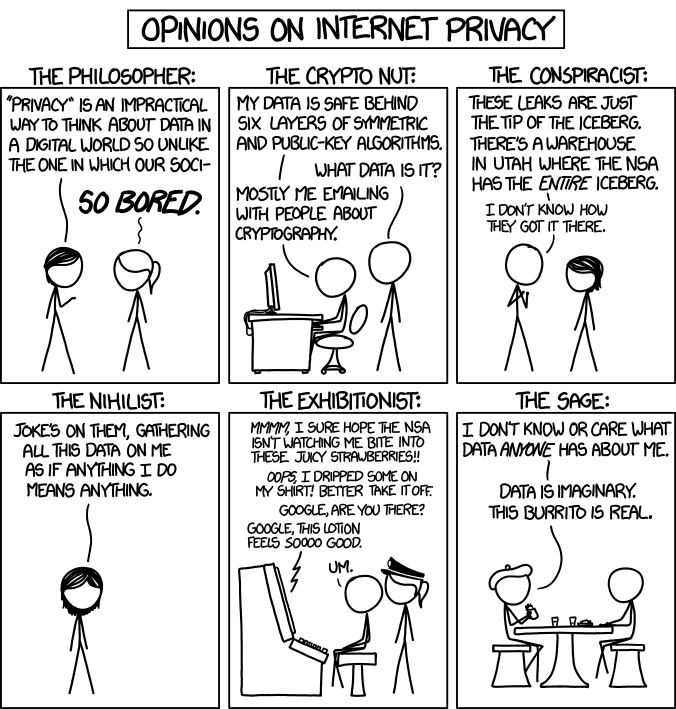
Did you realise your daily online activities contribute to Surveillance Capitalism? Tech giants profit from exploiting your data, fueling mass surveillance and disinformation, polarizing debates, and influencing elections. This menace extends to the very fabric of society, promoting censorship, uniformity of thought, and planned obsolescence.
The era of Big Tech
Big Tech comprises large and dominant technology companies. Like Google (Alphabet), Apple, Facebook (Meta), Amazon and Microsoft – the so-called GAFAM. But also OpenAI, Tencent, Baidu, Alibaba, Tesla, Uber, and so forth. They often thrive on user exploitation, offering ‘free’ services to turn private data into profits. Allegations against Big Tech include tracking malpractices, civilian surveillance, privacy breaches, tax evasion, antitrust violations, erosion of ethical standards, labor abuses, and so on.
Yet, Big Tech’s market value continues to surge, reaching over 10 trillion dollars in 2023. This value rivals the combined gross domestic product of Germany, France and the UK. In his 2008 Guerilla Open Access Manifesto, Aaron Swartz warned against information monopolization by private corporations: "Information is power. But like all power, there are those who want to keep it for themselves". His battle continues.

Why does privacy matter?
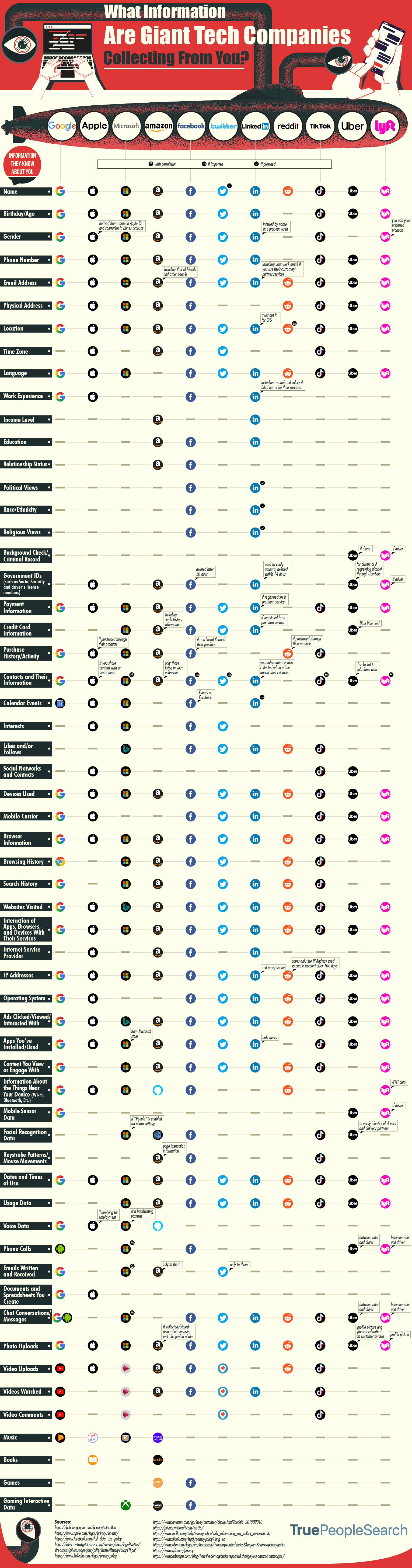
"If you have nothing to hide you have nothing to fear". This notion is fundamentally flawed. Privacy isn't just about hiding wrongdoing. Privacy is recognised as a fundamental human right by the United Nations and international laws. It enables free expression, and protects against surveillance, censorship, manipulation, and identity theft. It comes in various forms like secrecy of the ballot, attorney-client privilege, or medical confidentiality.
What does privacy mean? And what is the difference between privacy and security?
Privacy is about hiding your thoughts, actions, or communications while revealing your identity. Anonymity is about hiding your identity while sharing thoughts, actions, or communications. Security is about defending against pricacy and anonymity breaches.
Better security often means better privacy and anonymity, but less convenience. The right balance depends on your personal risk assessment. This guide is about achieving moderate privacy and data protection. However, it's not suitable for clandestine activities or evading strong adversaries.
In the footsteps of Upton Sinclair's 1917 novel "The Profits of Religion"
"Not merely was my own mail opened, but the mail of all my relatives and friends — people residing in places as far apart as California and Florida. I recall the bland smile of a government official to whom I complained about this matter: "If you have nothing to hide you have nothing to fear." My answer was that a study of many labor cases had taught me the methods of the agent provocateur. He is quite willing to take real evidence if he can find it; but if not, he has familiarised himself with the affairs of his victim, and can make evidence which will be convincing when exploited by the yellow press."
Mass surveillance and disinformation – fake or real?
Governments cut back on civil liberties under the guise of fear – be it from protests, terrorism, or pandemics. So-called "emergency measures" persist, infringing on privacy. Data collected by governments and corporations is weaponised to surveil, polarise and divide. Mass surveillance and disinformation undermine democracy and breed oppression.
Tell me more about mass surveillance and disinformation
| Threats to Democracy | Description |
|---|---|
| Global surveillance programs | In the aftermath of the US war on terror, several whistle-blowers revealed the existence of global mass surveillance programs. With more or less voluntary support of large corporations, governments throughout the world started to collect, store and share information on their citizens: online activities, phone calls, text messages, location history, etc. |
| PRISM | NSA's PRISM surveillance program was first revealed by The Guardian and The Washington Post in 2013. As explained by The Verge, it's a tool to collect private data from Big Tech and other organisations. 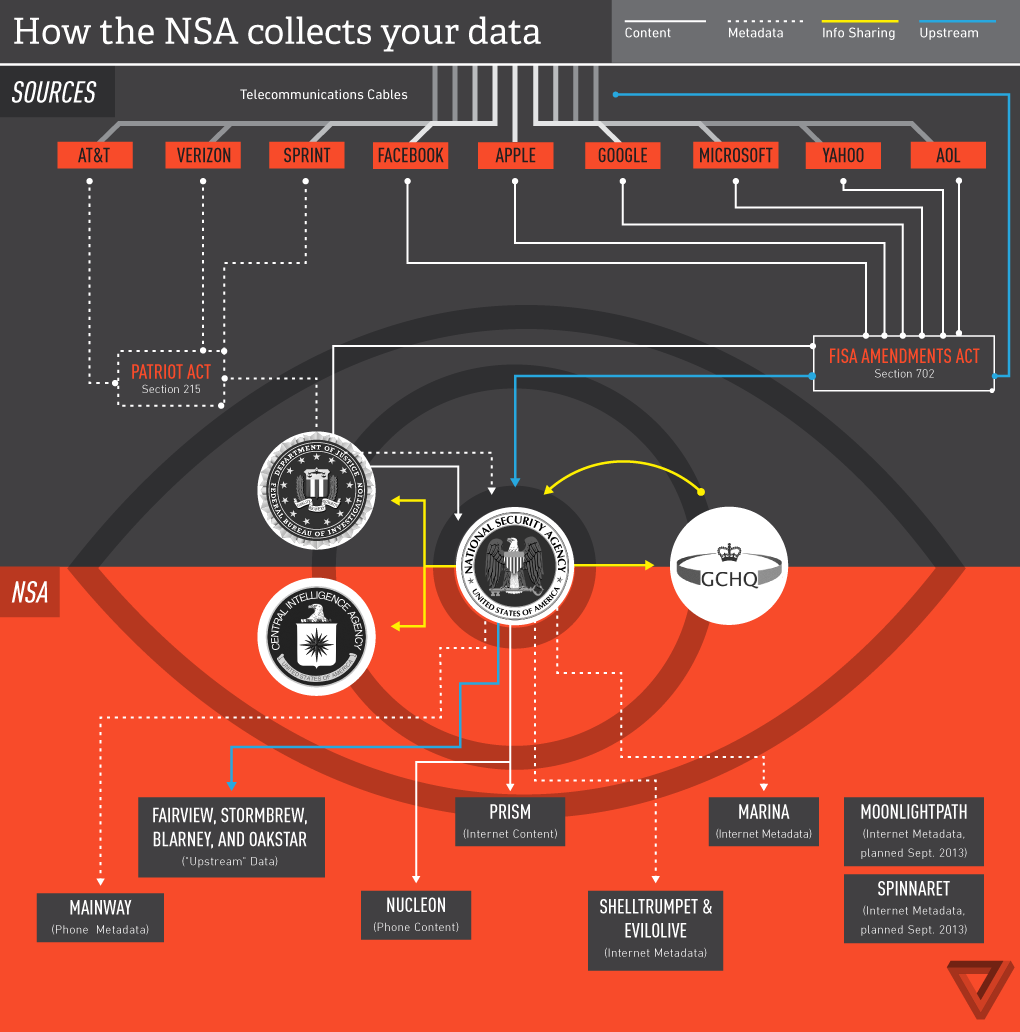 |
| XKeyscore | NSA's Xkeyscore program was first revealed by The Guardian in 2013. As explained by The Intercept, it's a tool for mass surveillance, fed with Internet traffic from fiber optic cables. To quote Edward Snowden: "I, sitting at my desk, could wiretap anyone, from you or your accountant, to a federal judge or even the president, if I had a personal email". 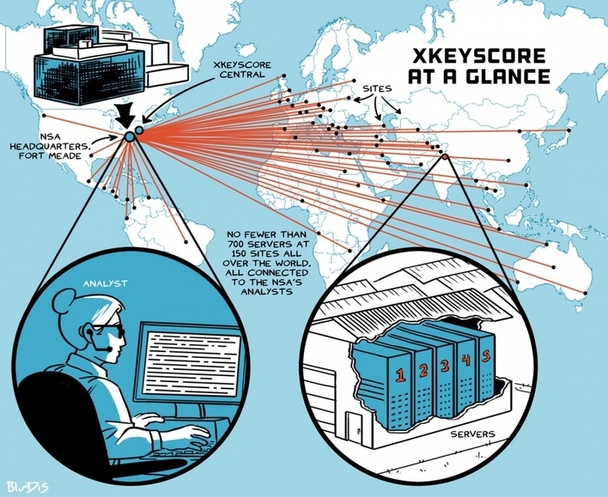 |
| Boundless Informant | Boundless Informant is one of the NSA's big data analysis tools. In 2013, The Guardian published the following heat map, on which countries range from green (least surveillance) through yellow and orange to red (most surveillance). The Atlantic Wire estimated that in March 2013 alone, the NSA retrieved and stored 9,7 petabytes of data. It's hard to wrap one's head around such figures, but just consider that this amount of data corresponds more or less to the entire television programming of the past decade. 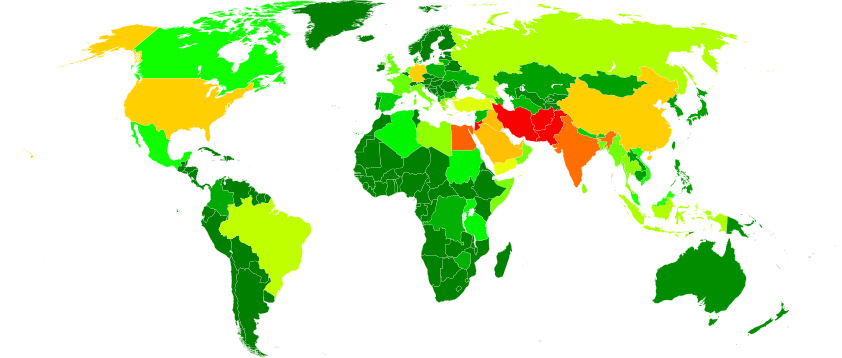 |
| Cambridge Analytica | Revelations around the role of Cambridge Analytica during the US presidential campaign in 2016 or the UK's referendum on European Union membership illustrate how misuse of private data and biased algorithms influence democratic processes and fuel political echo chambers. 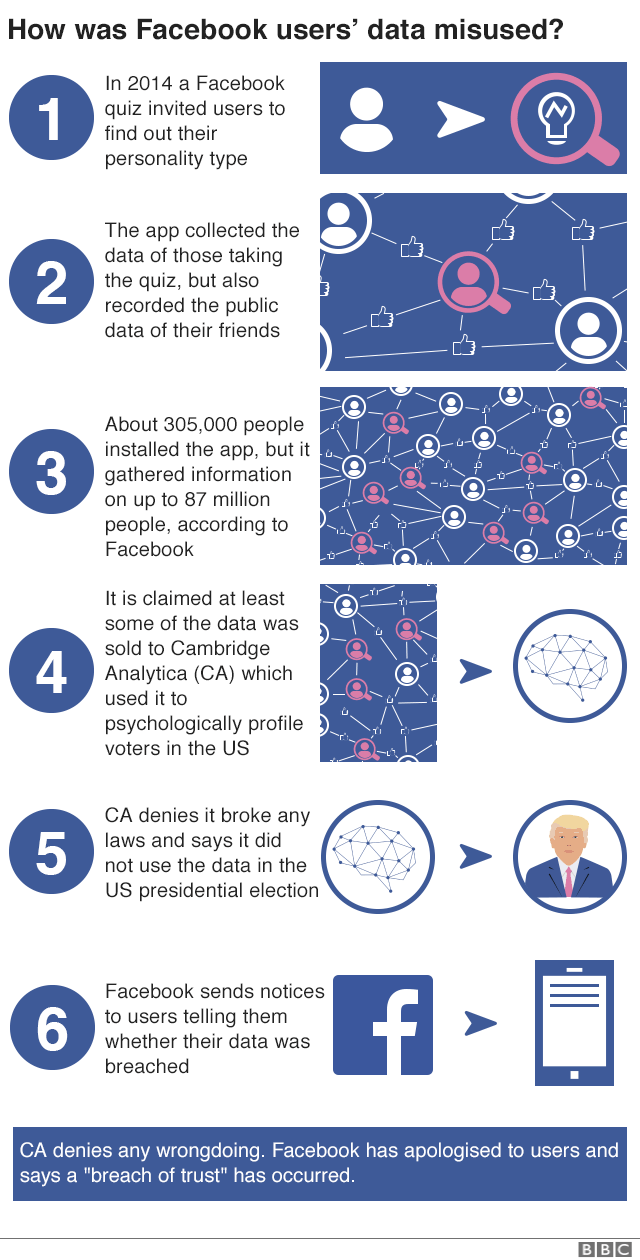 |
| Tracking the pandemic | Many countries started tracing (or tracking) citizens based on their phone's location to contain the COVID-19 outbreak. The data is collected via apps, or provided by telecom operators and tech firms such as Google and Apple. Behind a seemingly noble cause lies technology which enables digital tracking, physical surveillance and censorship. In fact, it didn't take long before the first privacy flaws where discovered. |
| AI disinformation campains | Generative AI tools help spreading false content during elections. In the 2024 US presidential election, Russia employed AI-generated deepfakes and fabricated news to influence voters. The Center for Geopolitical Expertise, linked to Russia’s GRU, created manipulated videos targeting Democratic candidates. These videos were disseminated through over 100 websites. The US Treasury Department sanctioned the group on 1 January 2025 for these actions. 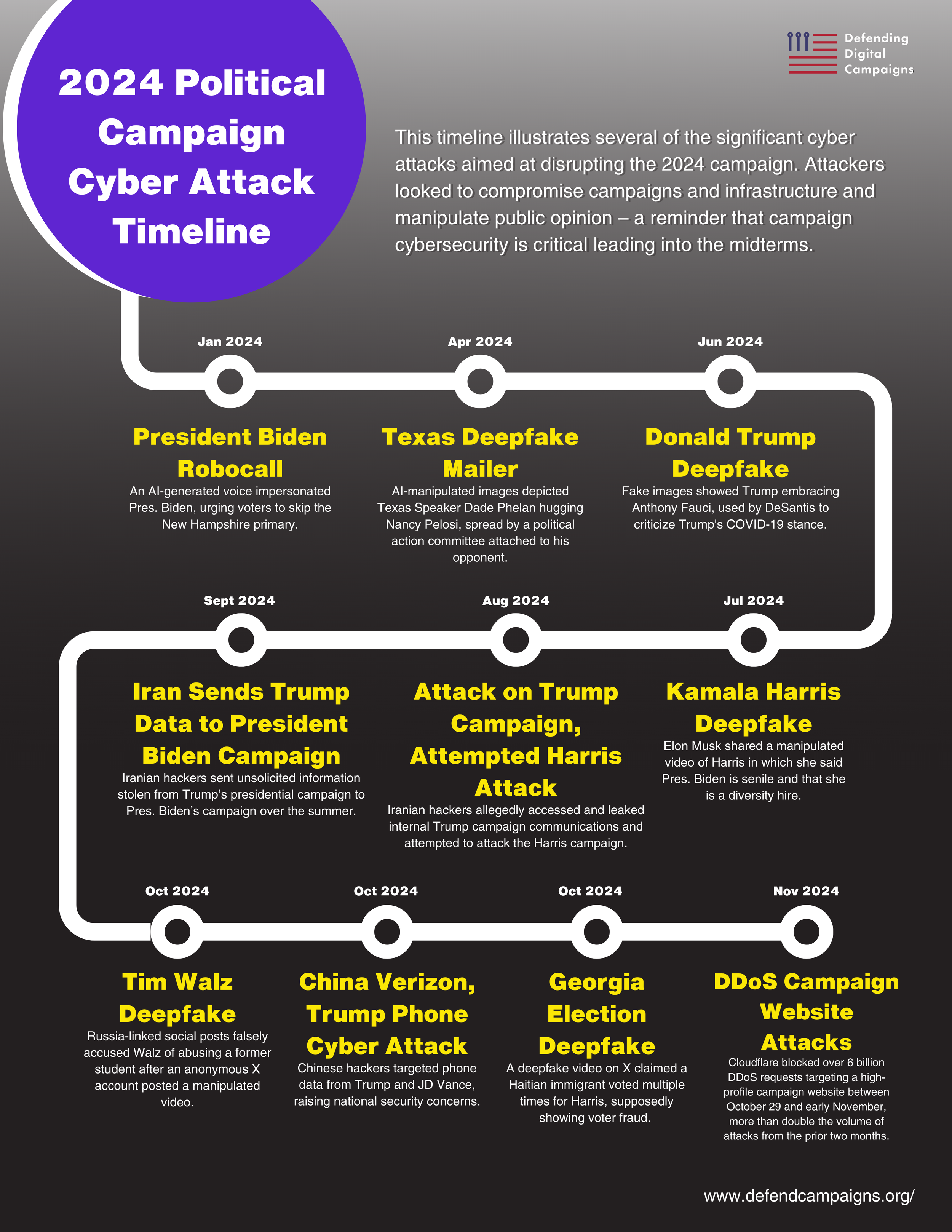 |